

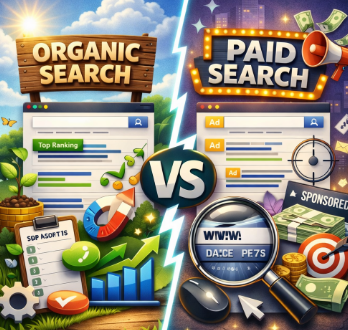
When it comes to online marketing, it is crucial to comprehend the distinction between organic vs paid search in order to create a viable online campaign. The two approaches are similar in that they both aid in the placement of websites during a search online, although they work in quite contrasting ways.
Organic search is concerned with gaining exposure by optimizing the search engines, whereas paid search depends on advertising to put content first on the results pages. When many businesses deliberate on SEO knowledge of a top-rated SEO company in the USA, it becomes easy to notice that the two strategies are suitable in taking significant roles to enhance site traffic.
This guide will answer the main questions on the differences between organic and paid search, the mode of operation of both techniques, and the common use of combining both in the quest to maximize online presence by marketers.
What Is Organic Search?
Organic search refers to traffic that users obtain at no cost through search engine listings. Search engines display results that they identify as the most relevant and useful for the user’s search topic.
We call these listings Organic Search Results, and search engines show them after evaluating factors such as content quality, keyword relevance, and website authority.
Organic search offers strong sustainability as a key benefit. When a page ranks well, it continues to attract users over time without relying heavily on paid advertising. This steady flow of visitors is known as Organic Search Traffic and remains one of the main goals of long-term SEO strategies.
What Is Paid Search?
Paid search, however, refers to paying to appear at the top of search engines that offer results in search engines. Companies place bids on particular keywords, and the advertisements are posted when people search for those words.
Visitors caused by such advertisements are called Paid Search Traffic. Paid campaigns provide instant exposure and could therefore be applied in product launches, marketing services, or marketing competitive phrases.
Paid search marketing is typically conducted on marketing tools such as Google Ads, which enables the marketer to manage budgets, targeting, and campaign performance.
Key Differences Between Organic and Paid Search
The concept of the differences between these two approaches assists marketers in using the proper strategy in pursuing their objectives.
Cost Structure
Organic search is time-consuming and labor-intensive as compared to direct clicks that attract fees. SEO is the optimization of content, better performance of the website, and the creation of authority.
Paid search is budget-intensive as the advertisers pay when a person clicks on the advert.
Time to Results
Organic rankings are developed over time. A page can also take months to deliver good visibility.
Paid search gives instantaneous results when the campaign has been launched.
Long-Term Value
Long-lasting traffic can be offered through organic search, should the content be a long-term stay.
Paid search will stop creating traffic once the advertising funds have been discontinued.
When to Use Organic Search
Organic strategies are suited to the tempering of long-term authority and regular traffic to the site.
Companies that concentrate on content production, streaming of websites, and advanced keyword ranking techniques used to rank keywords tend to have incremental rises in organic search over time.
On-page optimization services in the U.S are also used together with organic SEO by many marketers in the U.S with the view to enhancing the page structure, metadata, and harmful content.
When to Use Paid Search
Paid search can be utilized in cases of businesses that require instant visibility or companies that wish to narrow down to specific keywords within a short period of time.
An example is that new websites that are yet to achieve their organic ranking will resort to paid campaigns. Paid campaigns also allow experimenting with the success of different keywords prior to engaging in long-term SEO campaigns.
The connection of SEO to PPC is a topic of frequent discussions by marketers, as the two approaches contribute to search popularity in one way or another.
Combining Both Strategies
Most businesses combine organic and paid search techniques rather than adopting either of the two methods.
Organic search and paid search increase long-term believability and immediate opportunities, respectively. They jointly develop an equal marketing scheme that leads to maximum search exposure.
The combination of both techniques to attract local audiences and develop organic power is useful even to companies that have local SEO strategies for small businesses.
Final Thoughts
Knowledge of organic vs paid search is crucial to the construction of an effective digital marketing plan. Paid search offers instant visibility, credibility, and prominence of advertising; hence, organic search is long-term growth-based.
Each of the two approaches has its own advantages, and when combined, they have a high potential to enhance websites to appeal to and capture online communities. Through a conception of good SEO and strategic advertisement, marketers will be able to build long-term, sustainable search presence that can contribute to the growth of the business.
What is Organic Search?
Organic search refers to unpaid search engine results that appear based on relevance, quality, and authority rather than advertising.
What are Organic Search Results?
Organic search results are listings displayed by search engines that rank naturally according to their relevance to a user’s query.
What is Organic Search in SEO?
Organic search in SEO refers to the process of optimizing a website so it appears in search results without paid advertising.
How to Do Organic Search Engine Optimization?
Organic SEO involves optimizing content, improving website structure, conducting keyword research, building backlinks, and ensuring pages provide helpful information to users.